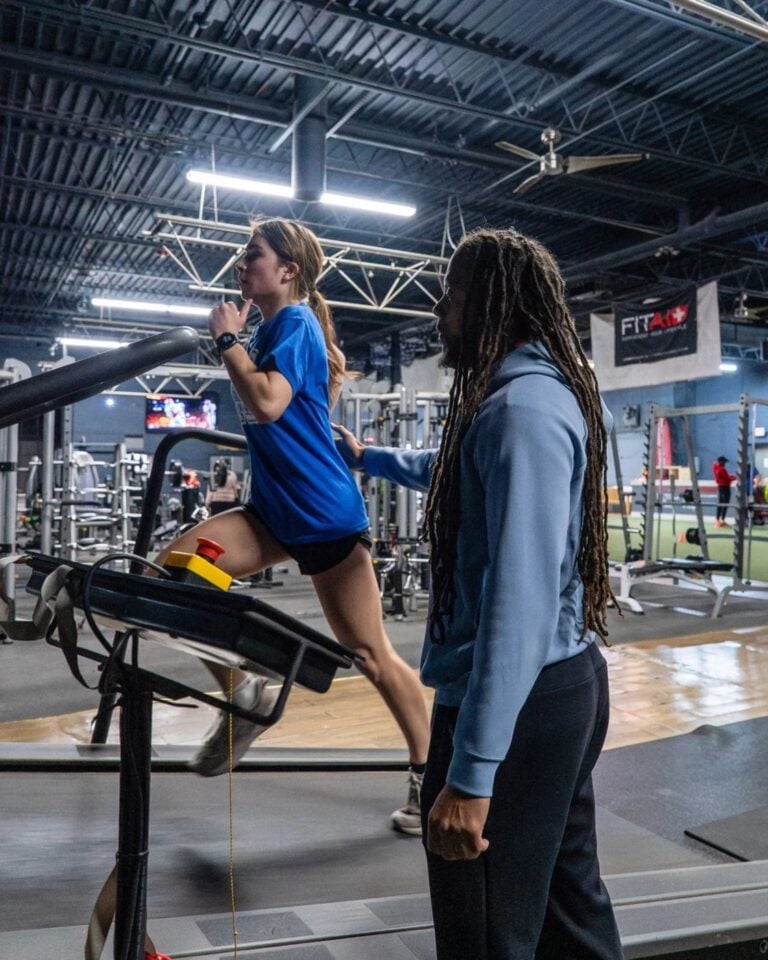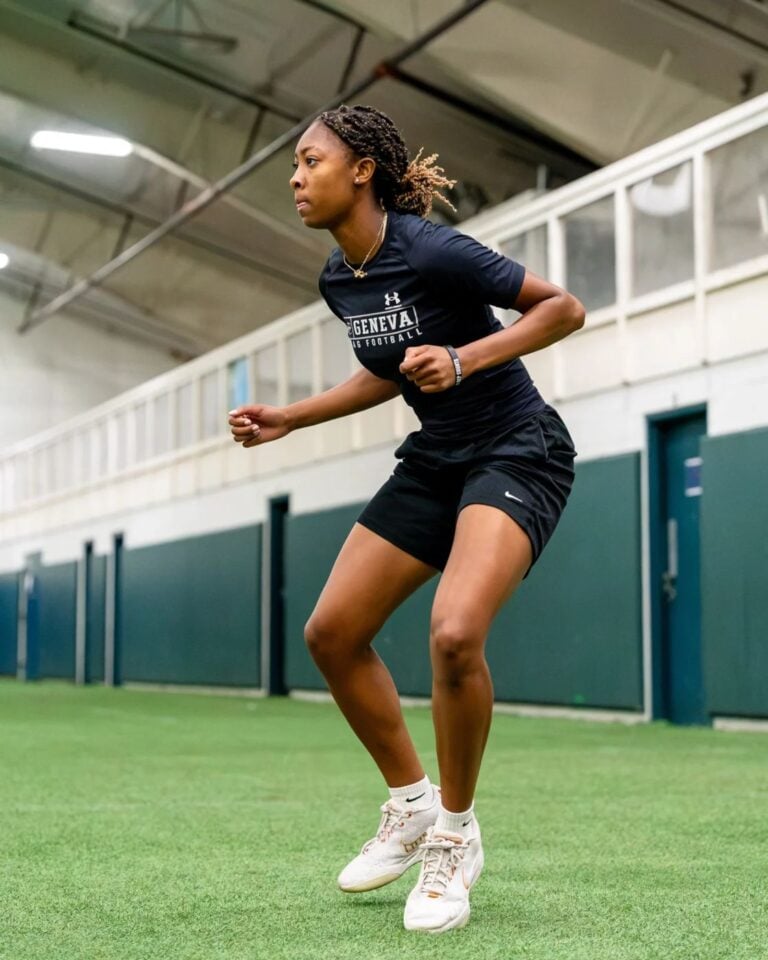
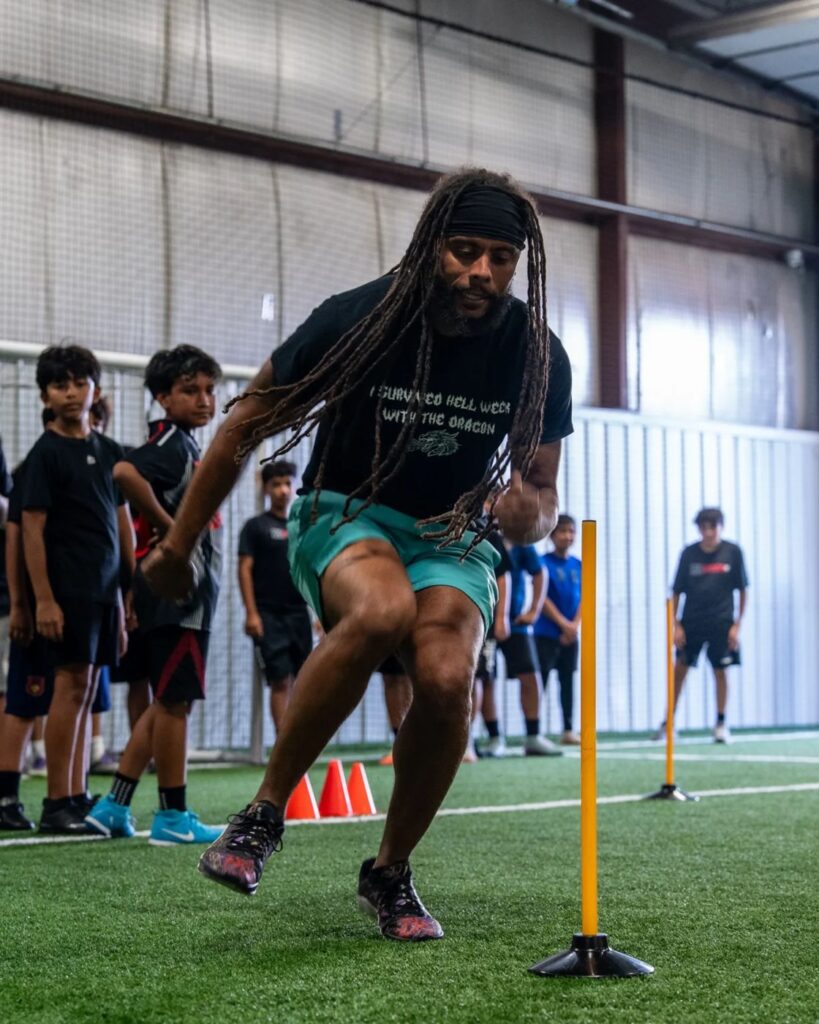
If you have a young athlete in Geneva, St. Charles, Batavia or anywhere nearby, you have probably heard another parent mention speed and agility training. It sounds simple. Run some drills, get faster. In practice, there is a big difference between a session that makes an athlete tired and a session that makes an athlete better. This guide explains what speed and agility training actually is, how often it should happen, and what to look for before you sign your athlete up anywhere, including with us.
Speed and agility are not the same thing
People use the two words together so often that they blur into one. They are separate skills, and they are trained differently.
- Speed is how fast an athlete covers ground in a straight line. It comes down to acceleration, top-end running mechanics, and how much force the athlete can put into the ground with each step.
- Agility is how well an athlete slows down, changes direction, and speeds back up, usually in reaction to something: a defender, a ball, a whistle.
An athlete can be fast and still struggle to cut. Another can be shifty and still get caught from behind. A complete program trains both, and it starts with the thing underneath both of them: how the athlete moves.
What a good session actually looks like
Cones and ladders are tools, not a program. A useful session is built in a deliberate order.
- A real warm-up. Mobility, activation and skips that rehearse the positions the athlete is about to sprint in.
- Mechanics work. Posture, arm action, shin angles, and how the foot strikes the ground. Small technical corrections here carry into everything else.
- Fast, short efforts with real rest. Speed is trained fresh. If every rep is run tired, the athlete is practicing being slow.
- Deceleration and change of direction. Learning to drop the hips and stop under control comes before learning to cut hard. We covered this in depth in our guide to change of direction and agility drills.
- Strength work that supports it. Stronger legs and a stronger trunk give an athlete more force to use and better control when stopping.
If a program is mostly conditioning, with athletes bent over and gasping between every drill, it is a conditioning class. That has its place, but it is not speed training.
How many days a week is enough?
For most young athletes, two to three focused sessions a week is plenty, especially when they are also practicing and playing their sport. Quality matters far more than volume. Speed work is demanding on the nervous system, and athletes need recovery days to actually absorb it. In season, one or two shorter sessions can maintain what was built. In the off-season there is room to do more. We will go deeper on weekly planning in an upcoming post.
Five questions to ask any program
Whether you are looking at us or at another facility in the Fox Valley, these questions tell you a lot.
- Do you evaluate athletes first? A 10-year-old learning to sprint and a college athlete rebuilding after a season should not be handed the same plan.
- Who is coaching, and what is their background? Ask who will actually be on the floor with your athlete.
- How are groups organized? Age and training experience both matter.
- Do you teach mechanics, or just run drills? Watch a session if you can. Listen for coaching, not just counting.
- How does this fit around my athlete’s season? A good coach adjusts the work when games pick up.
How we run it at Dragons Den
Dragons Den Sports Performance trains athletes out of two facilities: 1000 S Kirk Rd in Geneva and 721 Martin Dr in South Elgin. Our coaching puts a strong emphasis on the fundamentals every athlete needs: movement patterns, body positioning, footwork and running form.
Our 60 minute classes serve athletes from every sport. You can see how the training is structured on our training programs page, find class times for both locations on the weekly schedule, and compare options on the memberships page. A single drop-in class is also available if you want to see a session before committing to anything.
The next step
If you are not sure where your athlete fits, that is normal. Send us a note with their age, sport, and what you want to improve. A coach will get back to you.