Basketball and volleyball players all want the same thing: a few more inches. The internet is full of programs promising huge gains in a few weeks. The truth is less exciting and more reliable. A higher vertical comes from three things: how much force an athlete can produce, how quickly they can produce it, and how well they use their body when they jump. Train all three with patience and the inches come.
What actually determines how high you jump
- Strength. How much force the legs and hips can put into the floor, relative to bodyweight.
- Power. How fast that force is delivered. A jump happens in a fraction of a second.
- Elasticity. How well the muscles and tendons store and return energy during the quick dip before takeoff.
- Technique. Arm swing, approach steps, and timing.
Most young athletes are limited by strength first. Until an athlete can control their own bodyweight well in a squat, a lunge and a landing, advanced jump training is building on sand.
Step one: build strength
- Squats and split squats
- Hip hinges such as Romanian deadlifts
- Step-ups and single-leg work for balance between sides
- Calf raises and lower-leg strength for a stiff, springy ankle
- Trunk work so force is not lost through a soft midsection
Two to three sessions a week, with loads progressing gradually and technique coached closely, is enough. Parents who worry about teenagers lifting can read our post on whether lifting weights stunts growth.
Step two: learn to land before you learn to fly
Every jump ends in a landing, and basketball and volleyball players land hundreds of times a week. Landing softly, with the hips back and the knees tracking over the toes instead of caving inward, protects knees and ankles and sets up the next jump. We teach snap-downs, drop landings and stick-the-landing drills before adding volume to jumps.
Step three: add jump training in small doses
- Box jumps for full-effort takeoffs with a gentle landing
- Countermovement jumps with a full arm swing, measured and tracked over time
- Pogo hops and low hurdle hops for quick, elastic ground contact
- Broad jumps and bounds for horizontal power
- Approach jumps that rehearse the actual sport movement
Quality over quantity. Jump training is measured in a few sets of three to five crisp reps with rest in between, not in hundreds of contacts. Players who already jump constantly in practice need less extra jumping, not more.
Technique: free inches
- Use the arms. A fast, full arm swing adds real height. Many young players barely use it.
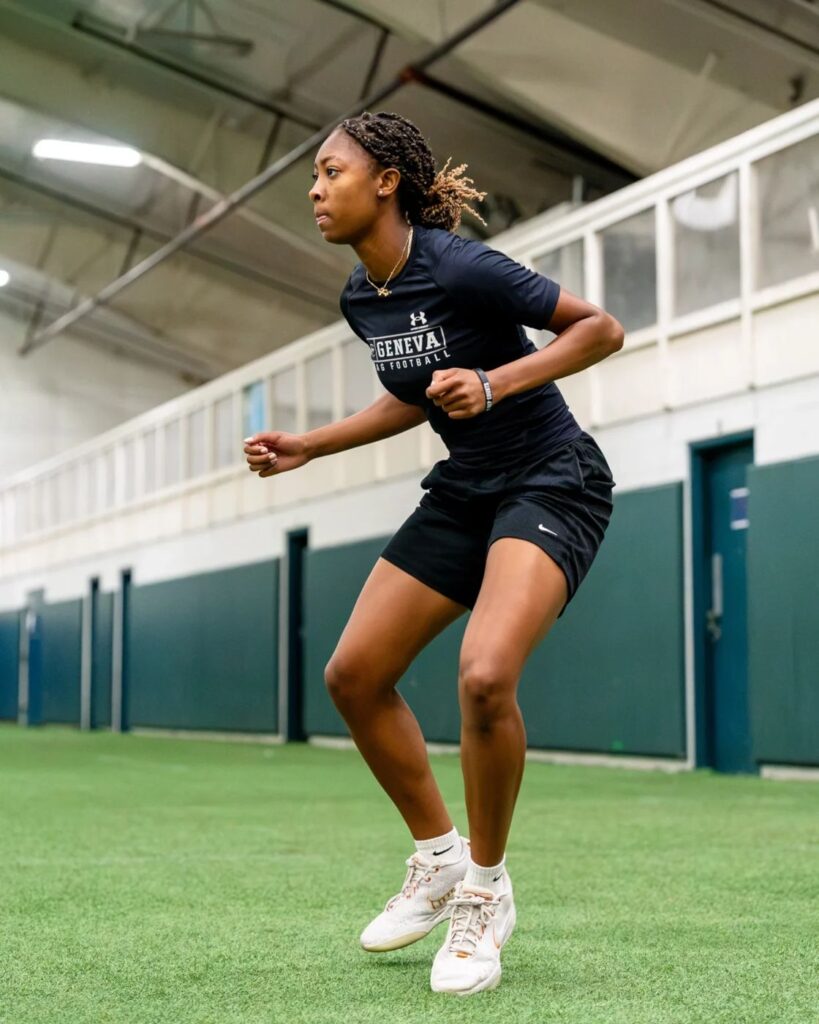
- Dip quickly. A fast, shallow countermovement usually beats a slow, deep one.
- Fix the approach. For volleyball hitters and players jumping off one or two steps, the penultimate step should be long and low to convert forward speed into height.
- Finish tall. Full extension through the hips, knees and ankles.
How long does it take?
Be skeptical of any program that promises a specific number of inches. How much an athlete improves depends on their training history, their strength, their age and how consistent they are. What we can say is that athletes who get stronger, practice jumping with intent, and stay consistent for months, not weeks, improve. Test the same way each time, every four to six weeks, and track the trend.
Common mistakes
- Doing jump programs with no strength base
- Too many jumps on top of a full practice schedule
- Ignoring landing mechanics
- Training through sore knees instead of adjusting the load
- Program hopping every two weeks
Jump training at Dragons Den
All of our training programs at Dragons Den Sports Performance are built to increase mobility, speed, agility, power and strength, and our 60 minute classes serve athletes of all sports. We train out of two facilities, 1000 S Kirk Rd in Geneva and 721 Martin Dr in South Elgin.
See what fits on the weekly class schedule, read about the Advanced Athlete Performance Program and one-on-one training, or contact a coach and tell us your sport and position.