Every soccer parent has watched it happen. A ball is played into space, two players chase it, and one of them simply gets there first. Speed changes games. But soccer speed is not the same thing as track speed, and the way young players should train for it is different too. Here is what actually makes a soccer player fast and how to help your kid build it.
What “fast” means in soccer
A soccer player rarely runs in a straight line for long. Most sprints in a match are short, and many start from a jog, a backpedal or a turn. So soccer speed is really a bundle of qualities.
- Acceleration. The first three to five steps. This decides most races to the ball.
- Deceleration. Slowing down under control so the player can turn, shield or strike.
- Change of direction. Cutting sharply without losing balance or speed.
- Reaction. Reading the play and moving early. A player who reacts first often looks faster than they are.
- Repeat-sprint ability. Being able to sprint again in the eightieth minute the way they did in the first.
Start with how they run
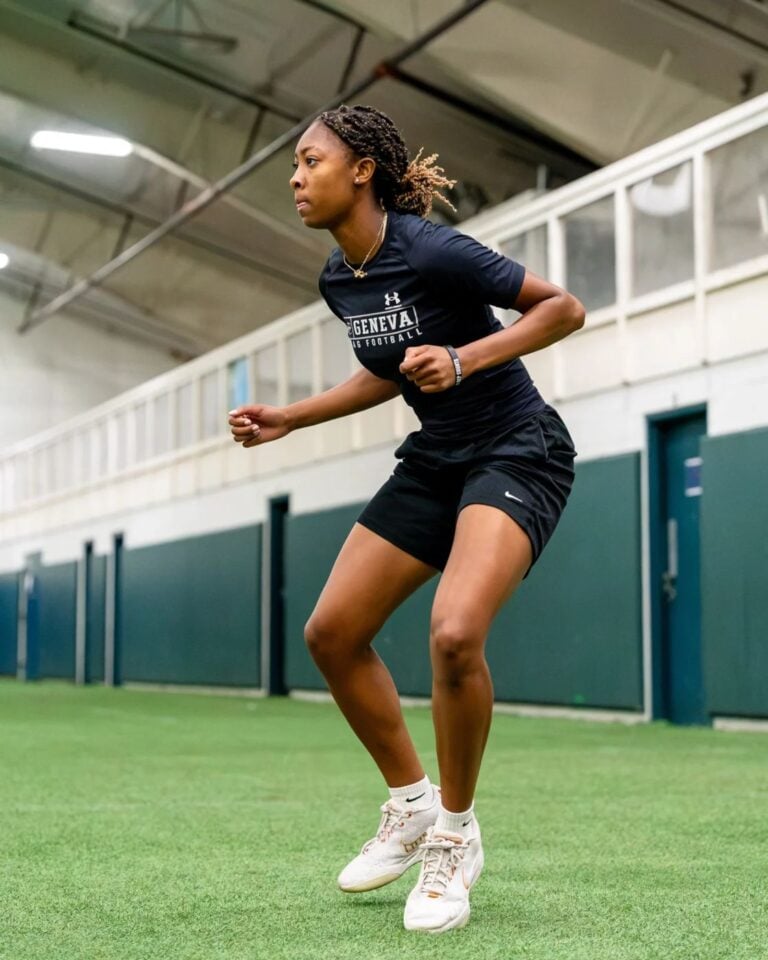
Before adding drills, look at mechanics. Many young players run with their arms crossing their body, their feet landing far out in front, or their trunk folding at the waist. A coach can clean up a lot with simple cues: tall posture, arms driving front to back, pushing the ground away behind them. Better mechanics are free speed, and they also reduce wasted energy over a full match.
Drills that transfer to the pitch
- Short sprints from different starts. Five to fifteen yards from standing, side-on, backpedaling, or lying down. Full effort, full rest.
- Deceleration work. Sprint and stop in two or three steps with the hips low and the knees tracking over the toes.
- Cutting progressions. Planned cuts first, then cuts in reaction to a coach’s signal or a partner’s movement.
- Mirror and chase games. Reactive, competitive and fun, which is exactly what younger players need.
- Small jumps and bounds. Low-level plyometrics that teach quick, springy ground contact and soft landings.
We break down several change of direction drills in our guide to mastering change of direction.
Strength is part of speed
Soccer players often skip strength training, and it shows. Stronger legs and hips mean a more powerful first step, better balance in challenges, and more control when stopping and turning. For younger kids this is bodyweight work: squats, lunges, single-leg balance, planks. For teenagers it can progress to properly coached weight training. If you are wondering whether that is safe, read our post on whether lifting weights stunts growth. The short answer is no, when it is supervised and sensible.
What to avoid
- Endless laps. Long slow running does little for match speed and takes time from things that help.
- Ladder drills as the whole program. Ladders build rhythm and coordination, but quick feet in a ladder are not the same as speed across a pitch.
- Speed work at the end of a hard practice. Tired sprinting teaches slow sprinting.
- Too much on top of club schedules. Many players already train and play four or five days a week. One or two focused performance sessions is usually plenty.
Fitting it around club soccer
During a heavy club season, keep performance work short and sharp, and place it away from match days. Breaks in the club calendar are the time to build. If your player is in a growth spurt and suddenly looks awkward, keep the coaching consistent and the volume modest. Coordination catches up.
Soccer athletes at Dragons Den
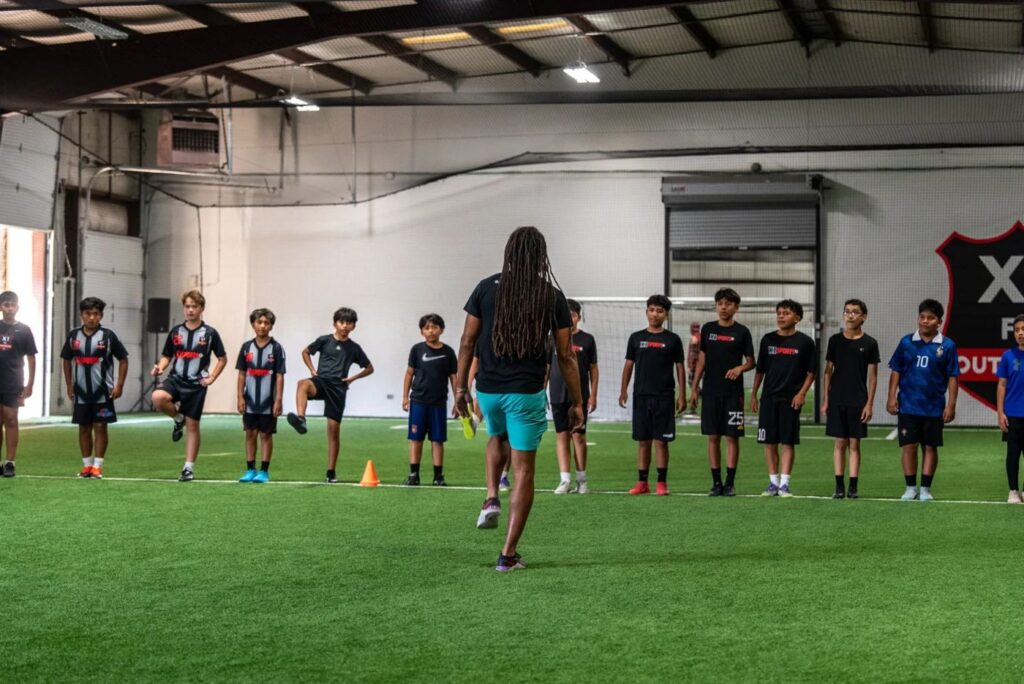
Our classes at Dragons Den Sports Performance serve athletes of all sports, because we believe in building a well-rounded, explosive athlete. Soccer players who have trained with our team include a player who went on to the Chicago Fire. Our coaches emphasize movement patterns, footwork and running form before intensity.
We run youth classes at 1000 S Kirk Rd in Geneva and a youth speed program on Wednesday evenings at 721 Martin Dr in South Elgin. We also offer team training for clubs and school teams that want to work on speed and conditioning together. See the weekly schedule, browse our programs, or contact a coach with your player’s age and position.