Few numbers follow a football player around like a 40 time. It shows up at camps, combines and in recruiting conversations, and a tenth of a second can change how an athlete is seen. The good news is that the 40 is a skill as much as it is a gift. Athletes who train it the right way get faster. Here is where the time actually comes from and what to work on.
The 40 is really three races
- The start, zero to ten yards. Stance, first step and the first few pushes. This is where most high school athletes lose the most time, and where the fastest gains are.
- Acceleration, ten to twenty-five yards. Staying low and pushing, with the body rising gradually instead of popping straight up.
- Top speed, twenty-five to forty yards. Tall posture, relaxed face and shoulders, and quick, stiff ground contacts.
Most athletes try to fix their 40 by running more 40s. It works better to train each of these pieces, then put them together.
Fix the start first
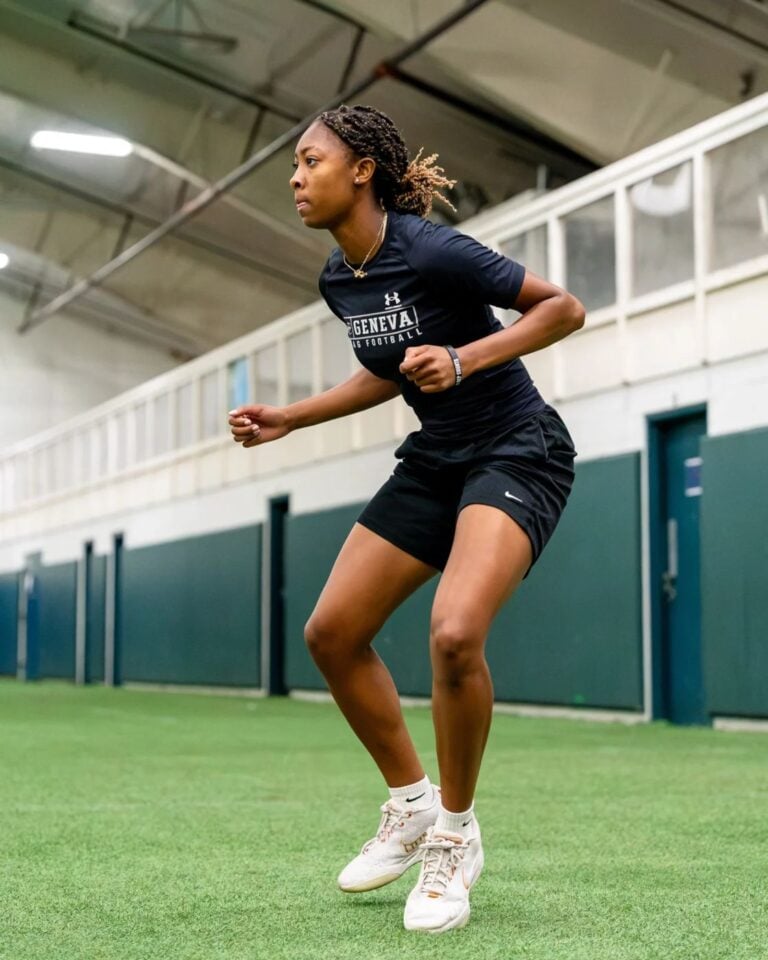
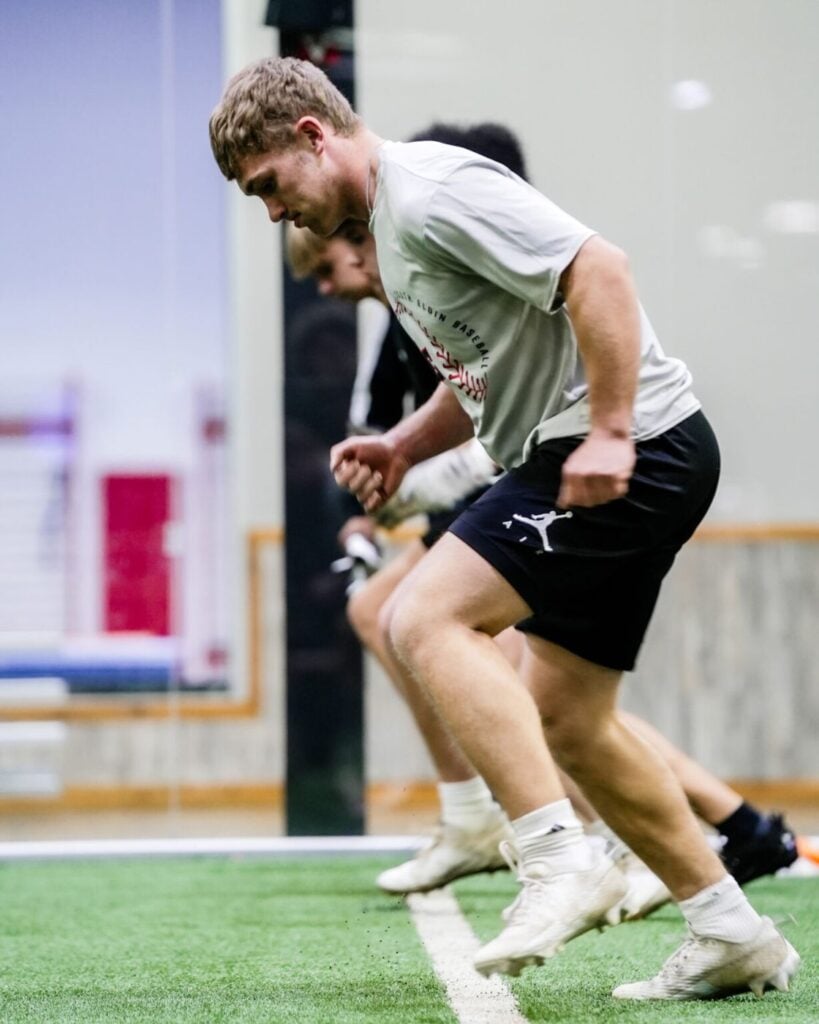
A good stance loads the front leg, keeps the hips slightly above the shoulders, and points everything forward. On the first movement, the athlete should push the ground away behind them, not reach forward with the front foot. Common mistakes we correct:
- Standing up on the first step instead of driving out at an angle
- A false step, where the front foot hops backward before going forward
- Short, choppy steps instead of long, powerful pushes
- Arms that swing across the body instead of driving front to back
Practicing starts over five and ten yards, with full rest between reps, is one of the most productive things a football player can do.
Build acceleration with resistance and hills
Acceleration is about force. The athlete who can push harder into the ground, in the right direction, wins the first twenty yards. Useful tools include:
- Sled pushes and resisted sprints with a load light enough that mechanics stay clean
- Hill sprints over short distances, which naturally teach a forward lean and a powerful push
- Wall drills and A-skips to rehearse shin angles and knee drive
Get stronger, especially through the hips
Speed is force applied quickly. Squats, split squats, hinges like Romanian deadlifts, and single-leg work build the engine. Jumps and bounds teach the athlete to use that strength fast. We covered several of these in 5 exercises to boost athletic performance and in our guide to hip strength and explosiveness.
Train top speed without wrecking it
Flying sprints, where the athlete builds up for twenty yards and then sprints all out for ten to twenty, teach top-end mechanics without the fatigue of repeated full 40s. Keep the reps low and the rest long, often two to three minutes or more. If the reps start to slow down, the session is done.
Mistakes that keep athletes slow
- Turning speed work into conditioning by cutting the rest short
- Skipping strength training
- Only training speed in the month before a camp
- Running every rep at ninety percent instead of a few reps at one hundred
- Ignoring hamstring and hip health until something pulls
A note on timing
Hand times and laser times are not the same, and different camps measure differently. Do not chase a number you saw online. Test the same way each time, track your own trend, and focus on getting better than your last honest time.
Train it with a coach
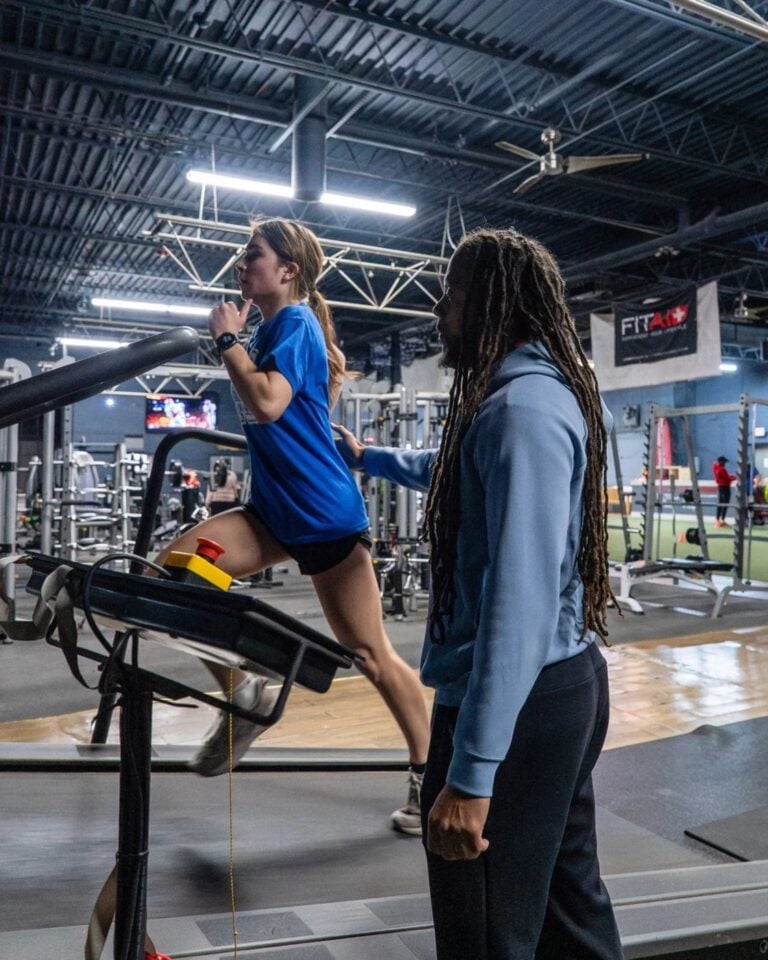
Sprinting is technical, and it is hard to see your own mistakes. At Dragons Den Sports Performance, our coaches put a strong emphasis on running form, body positioning and footwork. Coach Davion played college football and professionally in the Arena Football League, and football players who trained with our team have gone on to play at a higher level.
We run high school speed and weight training classes after school at our Geneva facility, 1000 S Kirk Rd, with a youth speed program at 721 Martin Dr in South Elgin. See the class schedule, look into one-on-one training if you have a camp coming up, or contact a coach to get started.