Ask a room full of sports parents about kids lifting weights and someone will say it: doesn’t that stunt their growth? It is one of the most persistent beliefs in youth sports. It is also a myth. Here is where the idea came from, what the medical and coaching organizations actually say, and how a young athlete should start strength training the right way.
Where the myth came from
The worry centers on growth plates, the areas of developing tissue near the ends of a child’s long bones. The fear is that lifting will damage them and stop a child from reaching full height. Growth plate injuries are real, but in young athletes they are far more often associated with falls, collisions and the impact of sport itself than with a supervised strength session. Running, jumping and landing in a game put forces through the body that are many times bodyweight. A controlled squat with a coach watching is a much calmer environment than a Friday night game.
What the experts say
The American Academy of Pediatrics, the American College of Sports Medicine and the National Strength and Conditioning Association have all published positions supporting resistance training for children and adolescents when it is properly designed and supervised. Their guidance points the same direction: there is no evidence that sensible strength training stunts growth, and there are real benefits, including stronger muscles and bones, better movement control, and a lower risk of sports injuries.
The key words are properly designed and supervised. The risk in youth lifting does not come from the barbell. It comes from poor technique, too much weight too soon, and nobody qualified watching.
One note: this article is general education, not medical advice. If your child has a medical condition or a previous injury, talk with their pediatrician before starting any training program.
What safe strength training looks like for young athletes
- Technique comes first. An athlete earns heavier weight by showing they can control lighter weight. Bodyweight squats before goblet squats, goblet squats before a barbell.
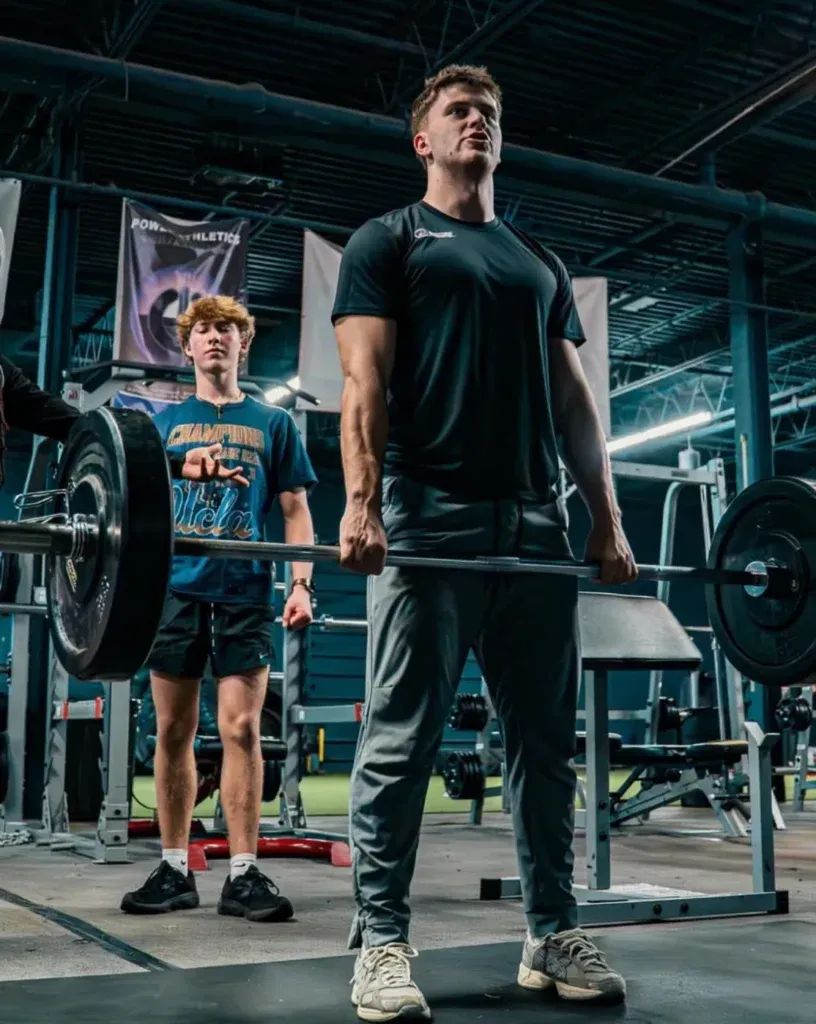
- Coaching is constant. A qualified coach is watching reps and correcting positions, not sitting across the room.
- Progress is gradual. Small, steady increases over months beat big jumps in a week.
- No ego lifting. Testing a one-rep max to impress friends is where young lifters get hurt. Training and testing are different things.
- The whole body is trained. Legs, hips, trunk, upper back and pushing muscles, in balance.
- Recovery is part of the plan. Sleep, food and days off are where the training actually takes hold.
When can a young athlete start?
A good rule of thumb: if a child is old enough to play organized sports and mature enough to follow instructions, they are old enough to begin learning strength movements. For younger kids that means bodyweight exercises, light medicine balls and learning positions. External load is added slowly as technique, focus and physical maturity allow. By high school, most athletes are ready for a structured weight training program, and those who learned good positions early have a major head start.
Why it matters for sport
Strength is the base that speed, power and durability sit on. A stronger athlete can put more force into the ground when sprinting, absorb more force when stopping and cutting, and hold better positions late in a game when fatigue sets in. It is a big part of how we think about building athletes, and it connects directly to the speed work we described in our guide to hip strength and faster cuts.
Strength training at Dragons Den
At Dragons Den Sports Performance, our coaches place a strong emphasis on movement patterns and body positioning before intensity. We run high school weight training classes after school at our Geneva facility at 1000 S Kirk Rd, along with youth classes built around learning to move well. Newer athletes train with a focus on refining technique and form, and coaches increase the pace and intensity as athletes progress.
See class times on the weekly schedule, read about the Advanced Athlete Performance Program, or talk to a coach about where your athlete should start. If you are curious about numbers, our free training calculators include a one-rep max estimator that lets athletes gauge strength without ever attempting a true max.