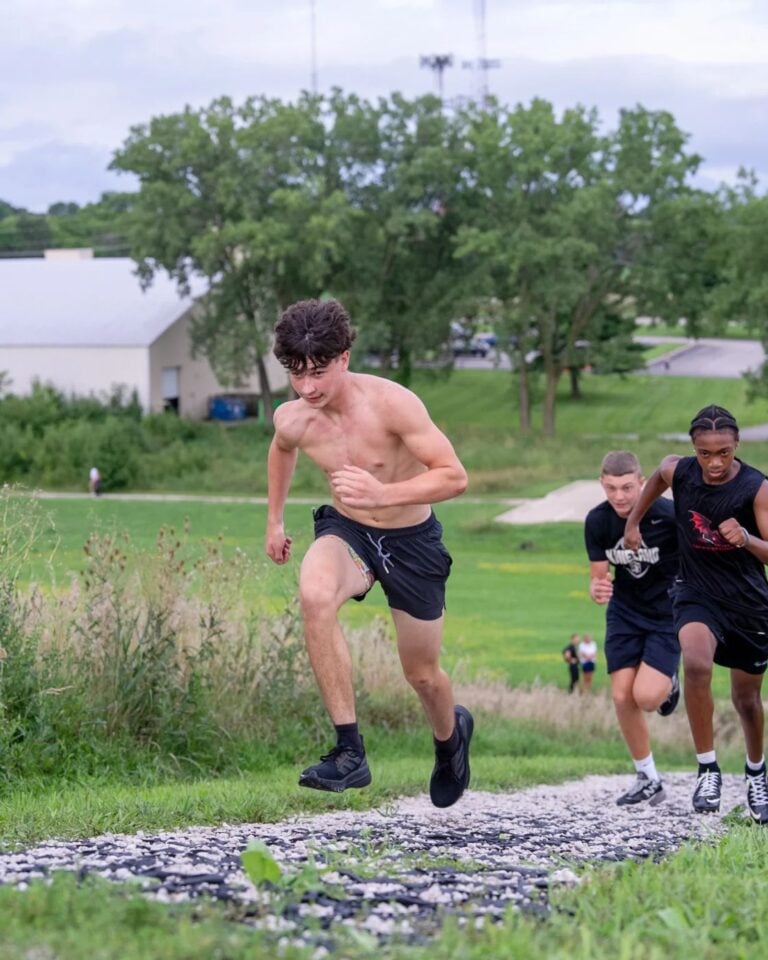

When an athlete decides they want to get faster, the first instinct is usually to do more. More days, more drills, more sprints. With speed and agility, that instinct backfires. Speed is a quality that has to be trained fresh, and the body needs time to adapt between sessions. So how many days a week is right? For most athletes the answer is two to three, and the details depend on the season, the athlete’s age, and what else is on their plate.
Why speed is different from conditioning
Conditioning rewards volume. You can build an aerobic base by doing a little more each week. Speed does not work that way. A true sprint is a maximum effort that asks the nervous system and muscles to fire as hard and as fast as they can. After a handful of quality reps, the output drops. Keep going and you are no longer practicing being fast. You are practicing being tired.
That is why a good speed session is built around short, full-effort reps with real rest in between, and why those sessions need recovery time after them. The goal is a small number of excellent reps, not a large number of average ones.
A simple rule: two to three quality sessions
For most middle school, high school and college athletes, two to three dedicated speed and agility sessions a week is the sweet spot. A typical week might look like this.
- Day one: acceleration. Short sprints, starts, and first-step work.
- Day two: change of direction. Deceleration, cutting technique, and reactive agility.
- Day three: top-end speed and mixed work. Slightly longer sprints and sport-specific movement.
Strength training fits around those days and supports them. Leave at least a day between the hardest sprint sessions, and do the fast work early in the session while the athlete is fresh.
In season versus off-season
Practices and games are training stress too, and they count.
- Off-season: this is where real gains are made. Three speed sessions plus two to three strength sessions is realistic for a committed high school athlete.
- Pre-season: keep the intensity, trim the volume, and make the work look more like the sport.
- In season: one to two short sessions a week is enough to hold on to speed and strength. The mistake is dropping training completely, then starting over every off-season.
Signs an athlete is doing too much
- Sprint times or jump numbers are going backwards
- Legs feel heavy for days, not hours
- Nagging soreness in the hamstrings, hips, shins or knees
- Poor sleep, low mood, or dreading sessions they used to enjoy
When those show up, the fix is almost never another workout. It is a lighter week, more sleep and better food.
Signs an athlete could do more
- They recover quickly and feel sharp at the start of each session
- Their sport schedule is light or they are in a true off-season
- Technique holds up from the first rep to the last
Even then, add work slowly. One extra session, or a few extra reps, then see how the body responds over two or three weeks.
What about younger kids?
For elementary and early middle school athletes, one or two sessions a week is plenty, especially if they are playing a sport or two. At that age the priority is learning to move well and enjoying it, which we covered in our guide on what age kids should start speed and agility training.
Building the week with a coach
The right number for your athlete depends on details that an article cannot see: their sport, their schedule, how they move, and how they recover. Our 60 minute classes run at two facilities, 1000 S Kirk Rd in Geneva and 721 Martin Dr in South Elgin, with high school speed and weight training after school and youth options at both locations.
Check the weekly class schedule to see what fits around practices, look at the membership options, or reach out to a coach and we will help you build a week that makes sense.